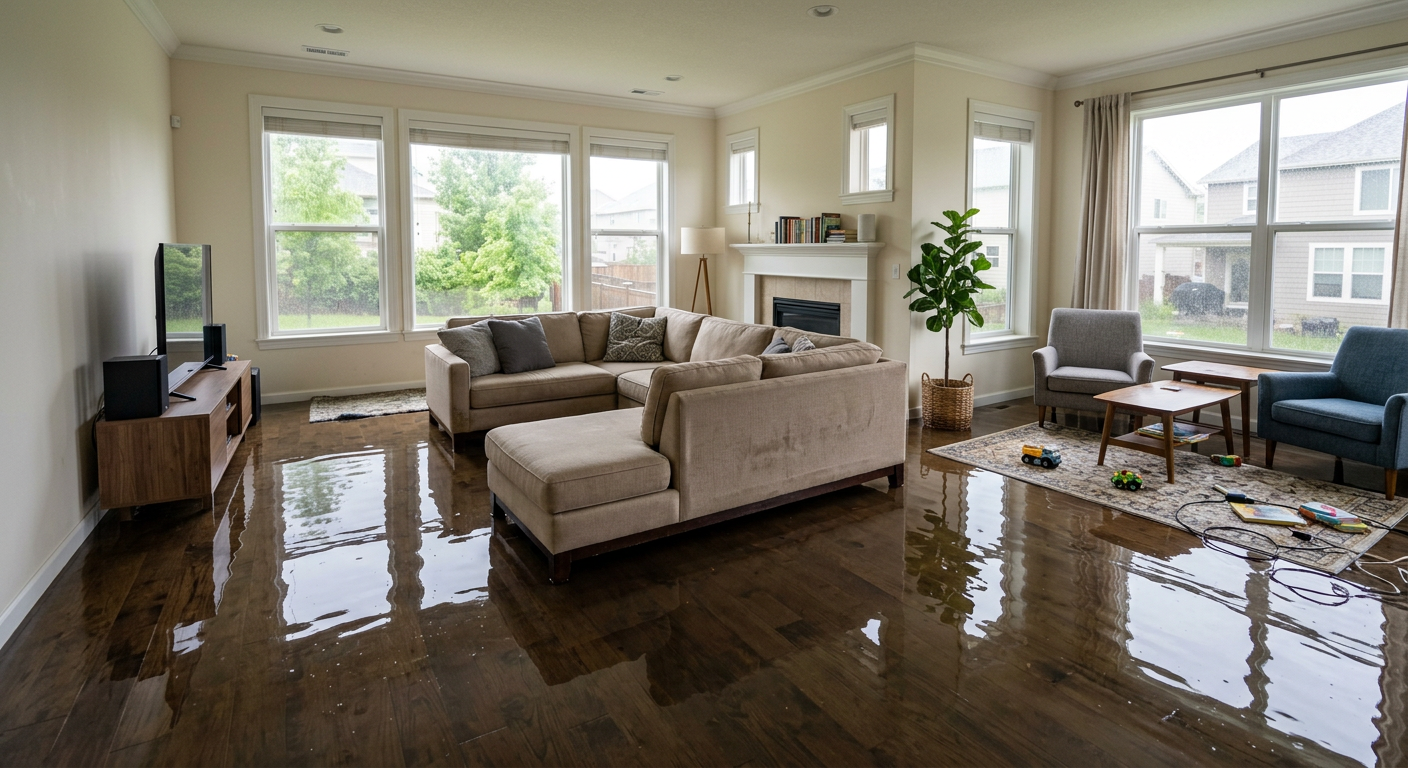
Water damage help
Water Damage Restoration in Clark County, Nevada
Water damage restoration is the full process of returning a water-affected home to a safe, dry and usable condition. It covers the assessment, water removal, drying, cleaning where needed, and the repairs that follow.
Many homeowners only hear the word restoration after a problem has already happened. This page walks through the stages in plain terms, so you know what a provider should be doing at each step and what questions to ask.
- Matched with a local provider
- Your details are used only to respond
What this looks like
Common scenarios for this type of water damage
Typical situations
- A plumbing failure has soaked several rooms and the homeowner needs a complete plan.
- Water has entered through a roof or ceiling and affected drywall and insulation.
- A flooded garage or laundry area has moved water into the adjoining living space.
- A home has dried partially on its own but still smells damp or shows swelling.
Materials often affected
- Drywall, insulation and ceiling materials
- Flooring, subfloors and baseboards
- Cabinets, built-ins and trim
- Framing and wall cavities where moisture is trapped
- Furniture and contents that may be salvageable
Water damage restoration
Need water damage restoration help in Clark County?
How water damage restoration works from assessment and drying through to repairs. Understand each stage and what to expect when you are connected with a Clark County provider.
First steps
What to do right now
Protect yourself and the people in your home first. These steps are general guidance and do not replace the advice of a professional or emergency responder.
- 1
Make sure the water source is stopped and the area is safe to enter.
- 2
Keep a written note of when the water was discovered and what caused it, if you know.
- 3
Photograph the damage before any materials are removed.
- 4
Keep all receipts for emergency measures, such as hotel stays or temporary repairs.
- 5
Avoid running heavy HVAC equipment that may pull contaminated air through the home until a provider has assessed it.
The typical approach
How restoration usually proceeds
Every property is different. A provider's written assessment is the best guide to the scope and timing of the work.
Clark County context
Clark County homes often have hard flooring, stucco or block exterior walls, and air conditioning systems that move air through ductwork. A restoration plan in the valley usually accounts for how quickly the desert air dries surfaces, and why hidden moisture in wall cavities and under flooring still needs to be measured rather than assumed dry.
Content last reviewed November 1, 2026.
- 1
Assessment
The provider inspects the home, identifies the source, classifies the water and measures moisture in materials. This creates a baseline for the drying plan.
- 2
Water removal
Standing water is extracted and wet surfaces are prepared for drying. Contaminated materials that cannot be cleaned are identified at this stage.
- 3
Structural drying
Air movers and dehumidifiers run until materials reach their target readings. Progress is documented over the drying period.
- 4
Cleaning and sanitation
Surfaces are cleaned where appropriate, and sanitizing is used when the water category calls for it. Porous materials that cannot be cleaned are removed.
- 5
Repair scope and rebuild
The provider documents the removed and damaged materials. Repairs such as drywall, flooring and paint are completed by whoever you hire for that work.
Where we help
Service areas in Clark County
Each area page covers the local considerations that affect water damage in that part of the county.
Call now
Need water damage restoration help in Clark County? Call now.
Questions
Common questions about water damage restoration in Clark County
What is the difference between restoration and repair?
Restoration focuses on drying the structure and making it safe and sanitary. Repair is the rebuilding that follows, such as replacing drywall, flooring or cabinetry. Some providers handle only one stage, so ask what is included.
How do I know when the home is dry?
A provider uses moisture meters and dry-standard readings to compare affected materials against unaffected ones. A drying plan is complete when readings reach the target, not simply when the surface feels dry.
Should I ask for a written scope of work?
Yes. A written scope lists the work, the equipment, the materials affected and the expected steps. It also helps when you share documentation with your insurer.
Do all water damage experts also do rebuilding?
No. Some handle assessment, extraction and drying only. Ask each provider what services they offer before you agree to anything.
Get help with water damage restoration in Clark County
Call the number above or send a callback request. Tell us what happened, where the water is and whether it is still flowing.
Call (702) 555-0147Referral disclosure. Clark County Water Damage is an independent referral website that helps connect property owners with water damage experts. We do not directly perform water damage restoration work and may receive compensation for qualifying referrals. Read more.