Water damage help
Emergency Water Removal in Clark County, Nevada
Emergency water removal is the first stage of a water damage response. The goal is to get water off floors, carpet and building materials as quickly as practical, so that the structure can begin drying before materials swell, warp or lose their strength.
This page focuses on the removal stage itself: what extraction involves, how it is paired with moisture checks, and what you can safely do while you wait for a provider to arrive.
- Matched with a local provider
- Your details are used only to respond
What this looks like
Common scenarios for this type of water damage
Typical situations
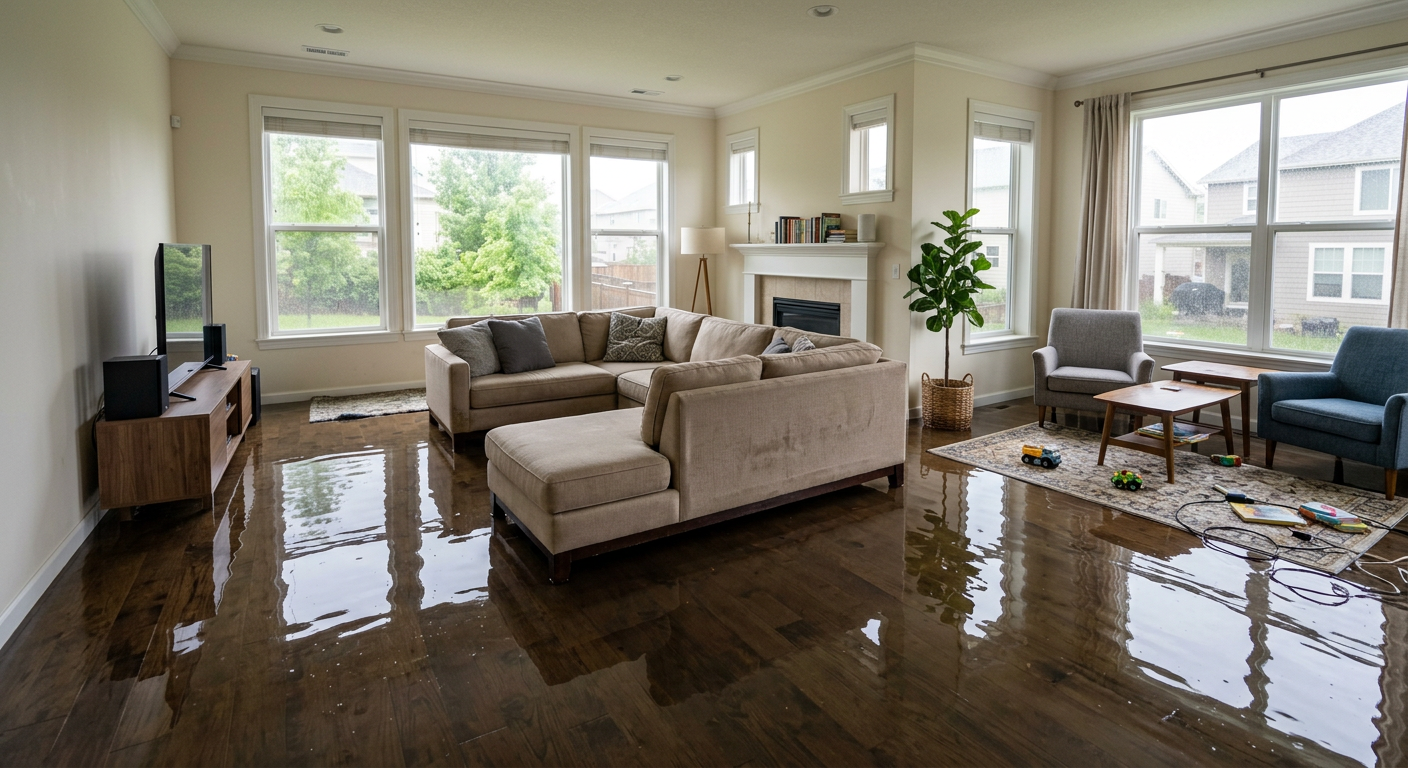
- Water has pooled across a tile or hardwood floor after an appliance or pipe failure.
- Carpet is saturated and water is seeping into the padding.
- Water is collecting in a garage, laundry room or utility closet.
- Rainwater has entered through a door, window or garage threshold and is spreading across the floor.
Materials often affected
- Carpet, carpet pad and area rugs
- Hardwood, engineered wood and laminate
- Tile floors and the subfloor below
- Lower sections of drywall and baseboards
- Garage floors and stored boxes or furniture
Emergency water removal
Need emergency water removal help in Clark County?
Standing water in your Clark County home? Learn how emergency water removal works, what to do before help arrives, and how to request a callback.
First steps
What to do right now
Protect yourself and the people in your home first. These steps are general guidance and do not replace the advice of a professional or emergency responder.
- 1
Stop the source of the water first if you can do so safely, such as closing a valve or switching off a running appliance.
- 2
Move furniture, rugs and stored items out of the water if you can do it without stepping into it.
- 3
Do not walk through deep water or water near electrical equipment. Keep away from outlets, cords and appliances that are standing in water.
- 4
Lift throw rugs and place foil or wood blocks under furniture legs to reduce staining.
- 5
Take photographs and video of the water level and damaged items before removing them.
- 6
Open windows and run fans only if the area is dry near electrical equipment and it is safe to do so.
The typical approach
How restoration usually proceeds
Every property is different. A provider's written assessment is the best guide to the scope and timing of the work.
Clark County context
Water removal in Clark County is often a matter of speed rather than volume. Hot, dry air can evaporate surface moisture quickly, but water that soaks into carpet pad, subfloor or wall cavities can stay wet long after the floor looks dry. Homes with tile floors, which are common in the valley, can hide moisture beneath the surface and in the grout lines, so a quick visual check is not enough.
Content last reviewed November 1, 2026.
- 1
Assess the water
The provider identifies where water is, how deep it is, and what kind of water it appears to be. This affects safety precautions and the cleanup approach.
- 2
Extract the water
Truck-mounted or portable extraction equipment removes standing water and pulls moisture from carpet, pad and hard flooring.
- 3
Map the moisture
Moisture readings are taken across floors, walls and subfloors to show where water traveled. Hidden wet areas are often found at this step.
- 4
Start drying
Air movers and dehumidifiers are set up to bring materials back toward normal moisture levels. The drying plan depends on the materials and the readings.
Where we help
Service areas in Clark County
Each area page covers the local considerations that affect water damage in that part of the county.
Call now
Need emergency water removal help in Clark County? Call now.
Questions
Common questions about emergency water removal in Clark County
How quickly does emergency water removal need to happen?
Sooner is generally better, because wet materials begin to deteriorate once they stay saturated. The exact timing depends on the material, the amount of water and the conditions in the home. A provider can explain the timing for your situation.
Can I use a wet vacuum myself?
A household wet vacuum can remove a small amount of surface water from hard flooring. It is not suitable for deep water, water near electrical equipment or any water that may be contaminated. Stop if you see electrical hazards.
Is it safe to walk in the water?
Do not walk through standing water if you are unsure of its depth or whether electrical equipment is nearby. Water can hide debris, sharp objects and energized equipment. Wait for a professional assessment.
Will emergency removal alone fix the damage?
Removal stops the water from spreading, but it does not dry the structure. Drying and moisture monitoring are usually needed afterwards, and repairs come after the materials are dry.
Get help with emergency water removal in Clark County
Call the number above or send a callback request. Tell us what happened, where the water is and whether it is still flowing.
Call (702) 555-0147Referral disclosure. Clark County Water Damage is an independent referral website that helps connect property owners with water damage experts. We do not directly perform water damage restoration work and may receive compensation for qualifying referrals. Read more.